
Insight
Alluvial vs Hard-Rock Gold: Choosing the Right Modular Recovery Approach
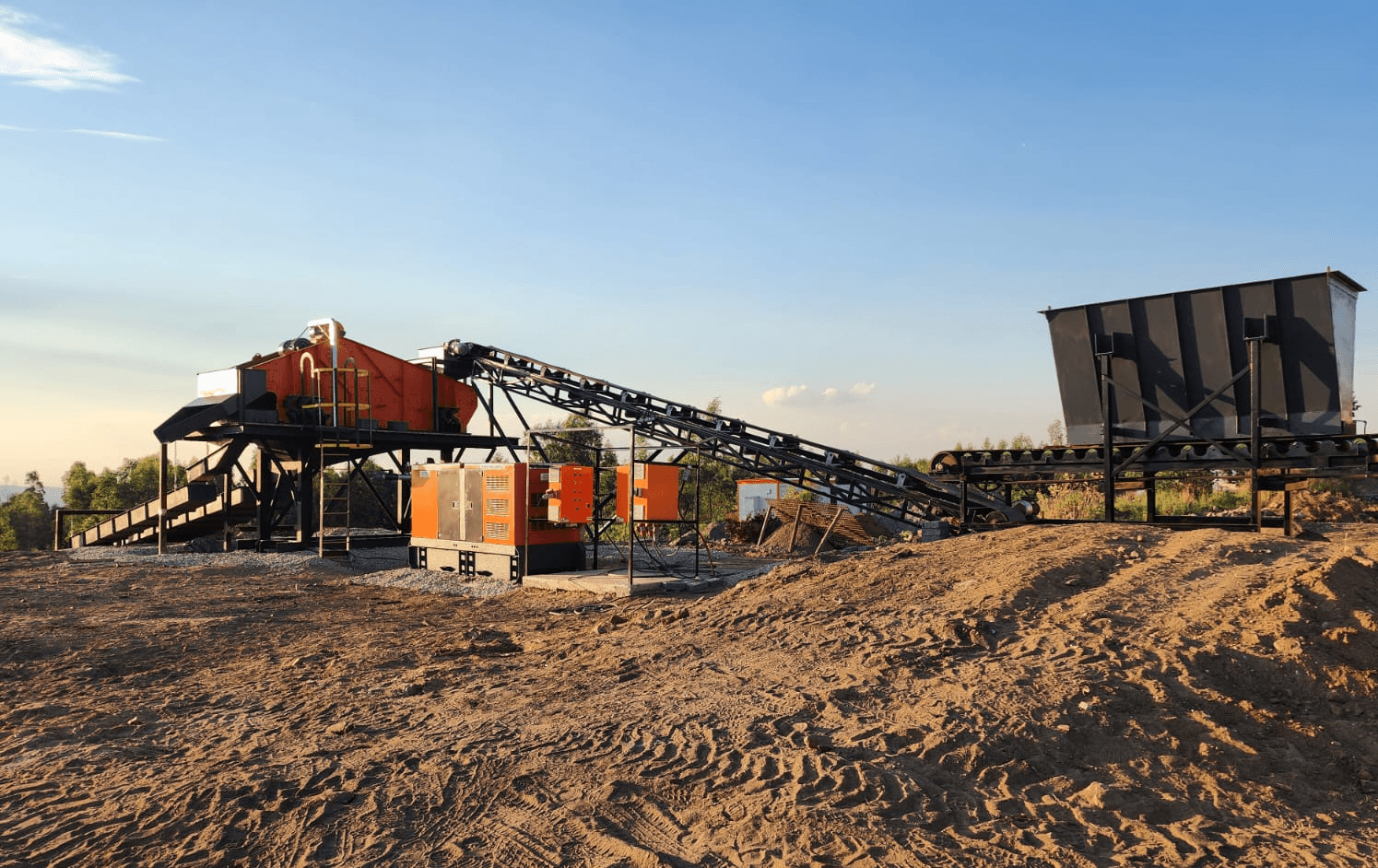
Gold recovery flowsheets differ significantly depending on whether the mineralisation is alluvial (placer) or hard-rock. Selecting the wrong starting point is one of the more expensive early mistakes a project can make.
Alluvial (placer) gold
Alluvial (placer) gold is typically already liberated. The primary challenges are washing, clay dispersion, screening and efficient gravity capture of free gold. Suitable modular packages therefore centre on scrubbing or trommel washing, screening, and gravity concentration (sluices, jigs, centrifugal concentrators and upgrade tables). These plants can often be trailer- or skid-mounted and deployed relatively quickly, making them attractive for exploration, bulk sampling and small-to-medium production.
Hard-rock gold
Hard-rock gold requires liberation before recovery. This means crushing and, in most cases, grinding before gravity concentration or other recovery methods can be applied effectively. Modular hard-rock packages therefore combine crushing modules with gravity concentration circuits (and sometimes further processing). Early liberation techniques and well-designed gravity circuits can recover a substantial portion of free-milling gold at relatively low cost and without the full complexity of a large CIL/CIP plant.
Practical selection questions
Practical selection questions include:
- Is the gold free or locked in sulphides or other minerals?
- What is the particle size distribution of the gold?
- How much clay or sticky material is present (especially important for alluvial feeds)?
- What recovery level is required to make the project viable at the planned scale?
- Is the plant intended for continuous production, bulk sampling, or a combination?
A well-chosen modular gold recovery plant should match the mineralogy and the project stage. Starting with a robust gravity-based modular circuit often provides early cash flow and valuable metallurgical information before larger capital decisions are made. Where the ore demands it, modular packages can later be expanded or integrated with additional process steps.