
Insight
Why Modular Conveyors Matter More Than Most Project Teams Expect
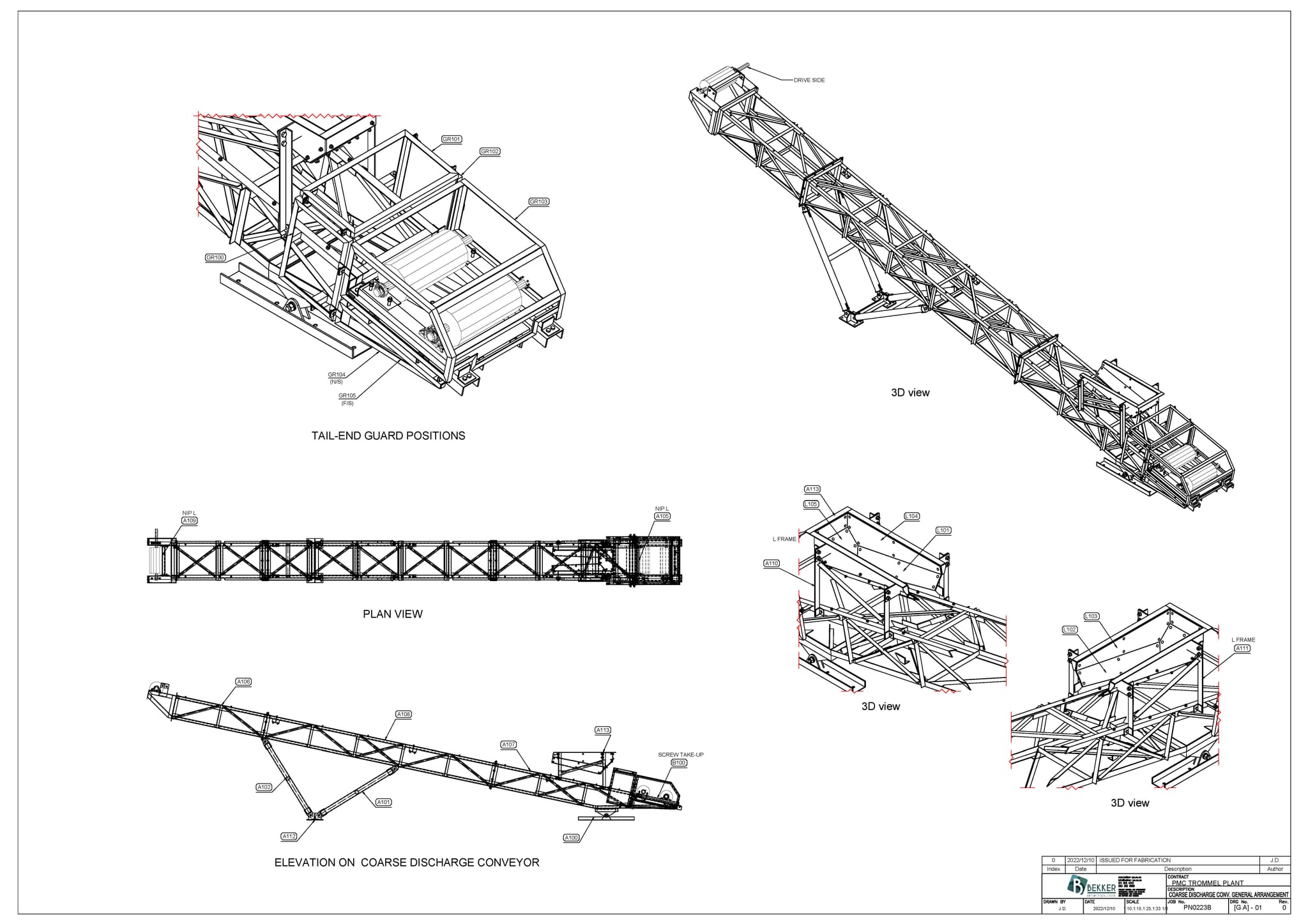
Conveyors are often regarded as simple connecting equipment. In reality they have a direct impact on plant availability, spillage, maintenance effort and the ability to stage or relocate capacity. Modular conveyor systems give project teams flexibility, but only when they are correctly engineered for the application.
Unlike many process modules that can be selected from a capacity range, conveyors must be sized according to the specific material characteristics (bulk density, particle size, moisture, abrasiveness), the required throughput, lift, length and the physical layout of the plant. A conveyor that is undersized or poorly matched to the material quickly becomes a bottleneck or a source of chronic spillage and wear.
Modular design done properly
Modular designs — including radial and stacking conveyors — allow sections to be transported and assembled efficiently and support future lengthening or relocation. The most successful installations treat the conveyor system as an integral part of the overall process design rather than a late-stage catalogue purchase. When this discipline is applied, modular conveyors deliver reliable material movement and protect the performance of the more expensive process modules they serve.